Modern warehousing and distribution operations face constant pressure to make the most out of every single inch available. Storage density and floor space utilization are the primary forces driving operations decisions across the industry. Most density conversations focus on product storage and throughput. But what about the space you’re giving up for packaging storage? Is your packaging working for or against your floor plan?
Corrugate Has a Footprint Problem
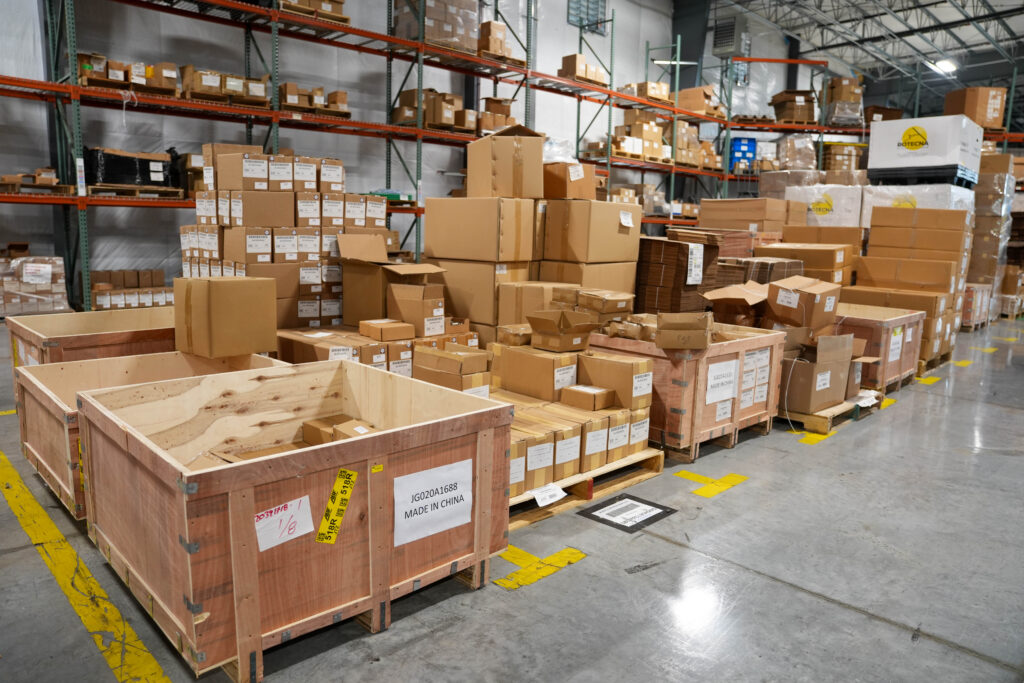
Single-use packaging is a consumable resource that requires a significant safety stock to ensure your closed-loop distribution operation has the containers on hand to keep product moving.
That safety stock carries a real, physical cost. From dedicated floor space clogged with corrugate to the trailers standing by waiting for demand to fluctuate, maintaining single-use transport packaging reserves, takes up valuable real estate.
But beyond the capital tied up in staged inventory and the productive floor space lost to storage, there’s another risk that’s rarely factored into unit price comparisons. When you rely on outside sources for your packaging, you expose your entire operation to potential price volatility and supply disruptions.
Reusable Containers Change the Equation
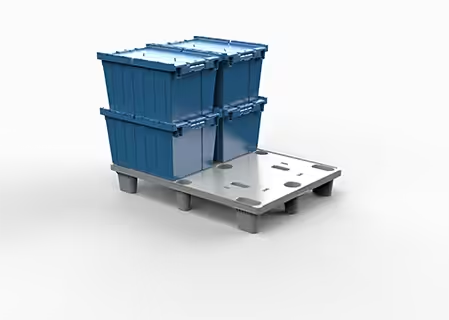
When you make the switch to injection-molded, reusable containers, your packaging stops sitting around and starts working for you. Because your closed-loop container fleet doesn’t accumulate, it circulates.
Your packaging heads out the door with your product secured and protected. Then, returns flow directly back into the system, offering a steady and predictable supply. Buffer stock is replaced with a flow of working containers as your WMS keeps them moving while keeping on-hand inventory lean.
Planning Your Packaging
Take a look around your warehouse at all the places your corrugated packaging accumulates. What could you do with that space? Carve out a new staging lane? Extend your throughput capacity? When you make the switch to reusable transport packaging, you get more than a marginal efficiency gain. You open up opportunities for structural changes that can have a big impact on your operation.
But that requires a shift in approach. Your packaging model and your facility’s space optimization strategy need to work together. Ops leaders designing closed-loop distribution models have to treat the container fleet as a floor plan decision. Not just a procurement checkbox.
Managing The Loop
Of course, it’s not as simple as swapping out your corrugated packaging for reusable containers. The efficiency gain is real, but it’s a managed outcome, not a passive benefit. None of this works without active loop management.
Turn prediction, attrition control, and return management are essential for keeping your reusable fleet circulating rather than accumulating.
A well-managed closed-loop fleet can dramatically reduce your on-hand container inventory. A poorly managed one will have you calling for emergency replenishment in two days.
Rethinking Your Packaging Model
When it comes to your warehousing and distribution operation, most efficiency conversations start (and end) at throughput. This one starts at the receiving dock, where your packaging arrives and waits.
Because a container fleet designed to circulate isn’t just a packaging decision. It’s a floor plan decision. Take another look at your warehouse floor. If your packaging is taking up space instead of earning it, it’s time to rethink the model.
Talk with a Monoflo packaging expert about building your reusable, closed-loop container fleet.
Want to dig deeper into the economics of reusable containers?
The floor space conversation is just one piece of the total cost picture. Our three-part Unpacking Container TCO series breaks down the full financial case for making the switch, from the procurement math most operations never run to the hidden costs that don’t show up on a purchase order:
Unpacking Container TCO, Part 1: Why Buying on Price Costs More in the Long Run
Unpacking Container TCO, Part 2: Calculating Costs Beyond the Purchase Order