When the 2026 MHI Annual Industry Report dropped last month at MODEX, we were eager to dig into the latest data. Like so many supply chain professionals, we look forward to this yearly pulse check on the health of our industry and the emerging trends and challenges we all face. This in-depth survey of more than 500 experts (60% VP-level or above) always offers a sharp, detailed, and data-backed map of where the logistics and distribution landscape is headed. This year was no different…with one glaring omission.
Where’s the Container?
The 2026 report, titled REWIRING THE FUTURE, A Supply Chain Playbook for Innovation, identifies AI and Automation/Robotics as the biggest industry disruptors and offers recommendations for navigating the industry’s most pressing challenges. The report is on target and insightful. There’s just one problem. Throughout this detailed 35-page document, the term “containers” appears exactly once. In passing. In a case study about sea freight.
Unfortunately, that oversight is nothing new. All too often, when considering the critical technologies that drive our industry, the physical layer of distribution innovation is missed, or worse, ignored. For many operations, the container is the variable quietly limiting their performance innovation returns. As we read through this year’s report, we couldn’t help but notice that every trend mentioned connects directly to containers. Here’s a closer look at the top three:
TREND 1: Workforce & Labor Dependency
The MHI survey found that talent and workforce challenges affect 90% of supply chain organizations. Nearly two-thirds rate it a major challenge, up 9 points from last year.1 That should come as no surprise, of course. Automation is on the rise in response to these challenges. That’s true.
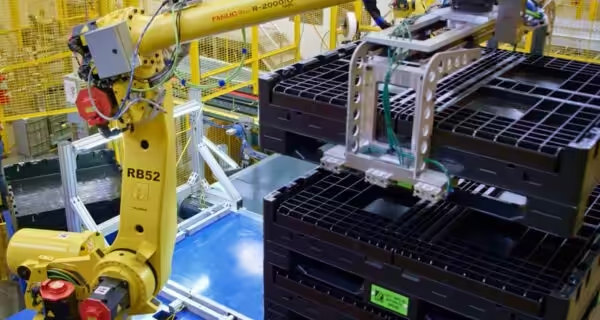
But the fact is that automation only reduces labor dependence when the containers running through your system are engineered to meet and maintain critical performance specs. Dimensional variances, degraded bases, worn sidewalls…these might not trigger a system alert, but they will trigger human intervention and response.
Because when your automation containers fail (or just underperform) an employee gets pulled off the floor to clear a jam, reposition a container, or override a sensor misread. The container is the one labor variable that many operations still haven’t isolated. When it doesn’t meet performance expectations, neither does your automated system. Regardless of how advanced your software and robotics might be.
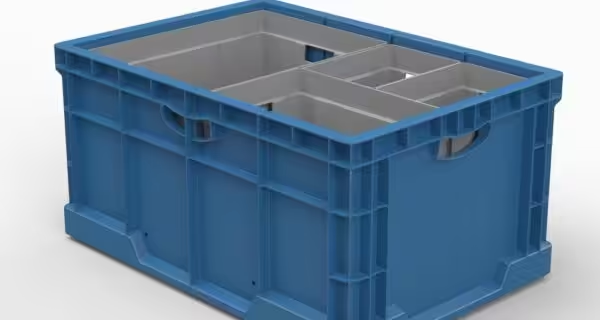
Monoflo automation containers are engineered to maintain dimensional consistency across their full cycle life. Because an automated system is only as labor-independent as the components it runs on.
TREND 2: Technology Adoption & Real-Time Data
This year’s report identifies RFID, the Internet of Things (IoT), and advanced analytics as among the top investments that operations across the industry are prioritizing. The driving force behind that innovation momentum is simple: real-time data is no longer a “nice-to-have”. It’s a strategic necessity. MHI goes so far as to call out legacy systems that can’t support real-time data as an immediate operational threat.
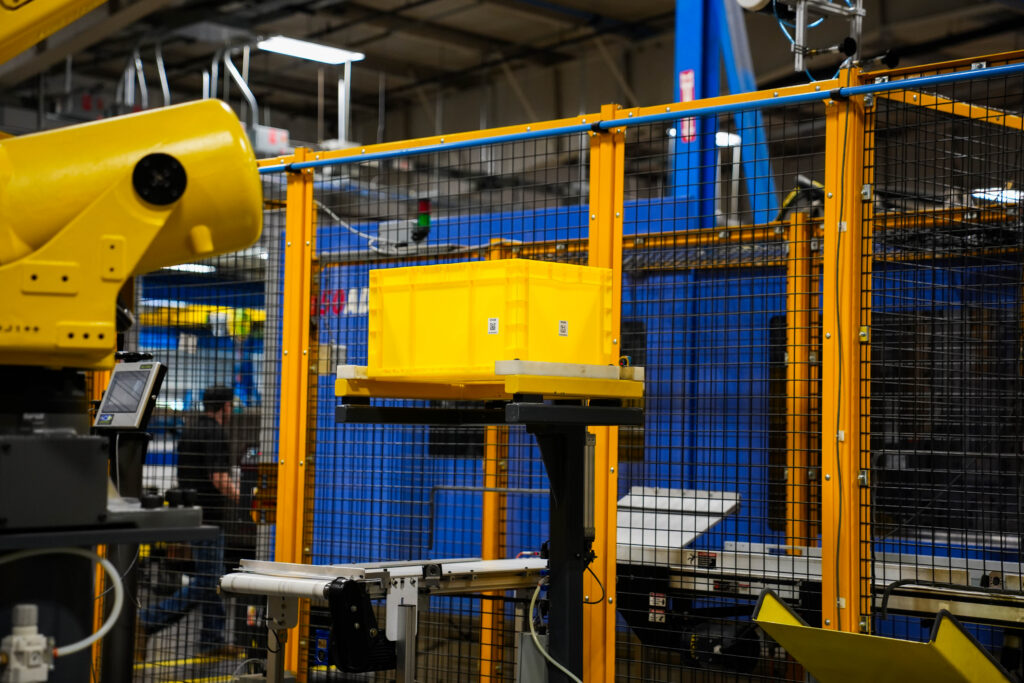
What’s the one thing that all those technologies have in common? If you guessed “the container”, you’re catching on to the theme of this post. Containers are the physical layer that all three of those technologies attach to or directly interact with. If your container degrades in a way that impacts label readability or sensor detection, it creates a data gap and introduces costly instabilities in the data infrastructure. In industries where container traceability is a must-have, it pays to spec these features at the container design phase.
From smart sensors to precision tracking, if your containers aren’t engineered to move frictionlessly through your advanced warehouse systems, then the whole system underperforms.
Monoflo’s in-mold labeling (IML) capabilities and RFID-ready container designs are engineered to maintain identification integrity across high-cycle use, temperature variability, and washdown processes, so your traceability infrastructure performs as intended from first cycle to last.
TREND 3: eCommerce Growth & Fulfillment Speed
First, eCommerce changed the way the world shops. Then it changed the way the world ships. Along the way, customer expectations shifted. Now, next-day (if not same-day) delivery is becoming the norm. But the infrastructure that made those experiences and expectations possible is still being built through the rapid deployment of robotic picking, automated sortation, and high-speed conveyor systems across warehouses and distribution centers.
Those systems are engineered to tolerances measured in millimeters. If your containers don’t hold their dimensions, throughput variability compounds at scale. And when failures occur, they show up as fulfillment problems, not container problems. The actual root cause could end up costing your operation in the long run.
Monoflo containers are specified for high-speed automated sortation and picking environments. They’re engineered to the dimensional standards each unique system requires and proven to perform consistently across the cycle volumes those environments demand.
Connecting Container Innovation to Your Operation
Once again, this year’s MHI annual report clearly maps the strategic landscape of our rapidly evolving industry. But it misses the physical foundation that connects so many of the innovative technologies shaping the market.
Monoflo International has been perfecting that foundation for more than 50 years. We start at the system design stage, engineering containers to meet your operation’s unique needs. And our job’s not done until every single one of those containers is moving smoothly through every rack, conveyor, and sensor array.